Best Greyhound Betting Sites – Bet on Greyhounds in 2026
Loading...
More Than Just a Colour Scheme
Every greyhound that lines up at a UK track wears a numbered jacket in a specific colour. To anyone watching for the first time, it looks like a random assortment — a flash of red, a blur of blue, a streak of orange. It isn’t random at all. The colours are standardised across all GBGB-licensed tracks, each one permanently assigned to a trap number. Once you know the system, you can identify any dog’s starting position at a glance, follow its progress through the bends, and confirm your selection crossed the line in the right place — all without needing a slow-motion replay or a commentary feed.
The trap colour system is the simplest piece of greyhound knowledge to learn and one of the most useful. It takes less than a minute to memorise, and it transforms how you watch and understand a race.
The Six Trap Colours and Their Numbers
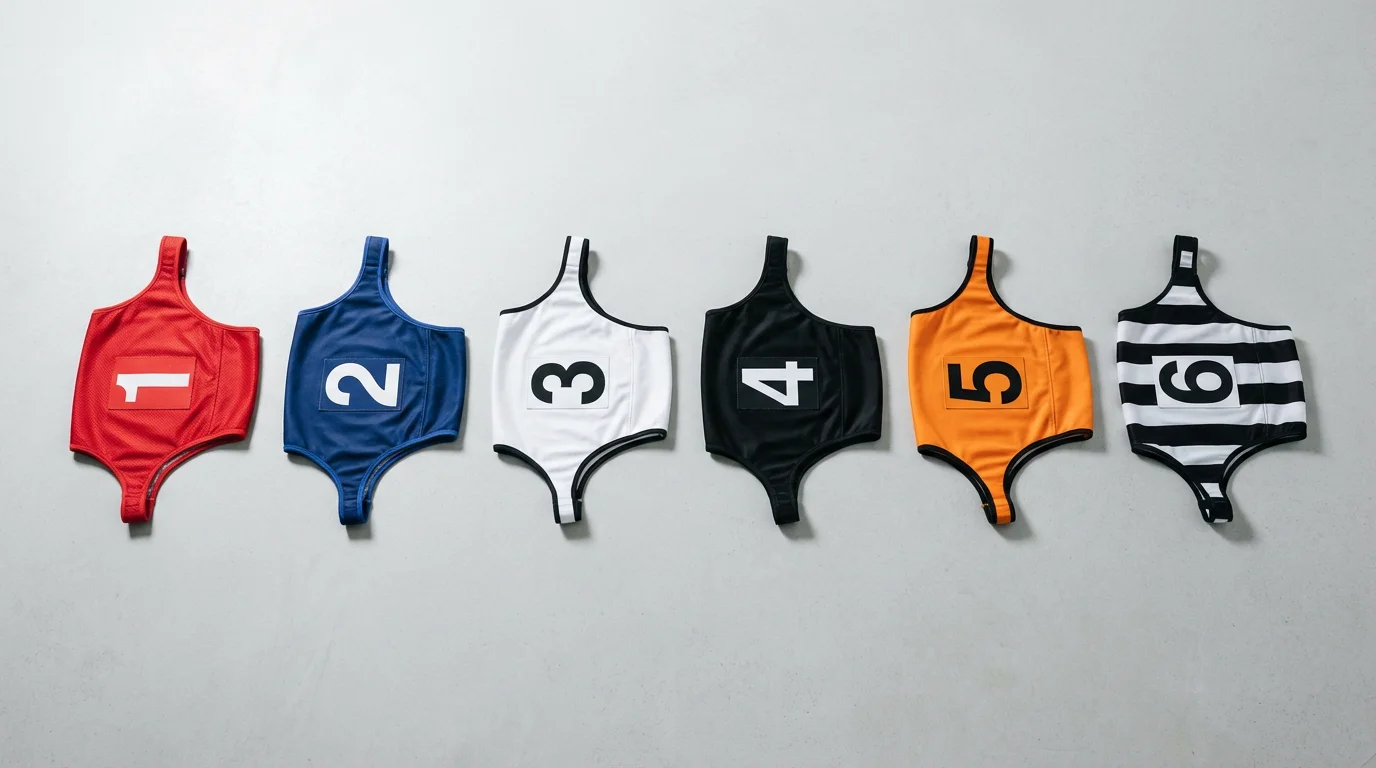
The system is universal across UK greyhound racing. Trap one is red. Trap two is blue. Trap three is white. Trap four is black. Trap five is orange. Trap six is black and white striped — often described simply as “striped.” These colours have been standard for decades and are the same at every licensed track in the country, from Romford to Sunderland, from Towcester to Shawfield.
The colours are applied to lightweight racing jackets — close-fitting vests that cover the dog’s torso without restricting movement. Each jacket carries the trap number prominently on both sides and on the back, visible to spectators, cameras, and officials from any angle. The jackets are put on the dogs shortly before they enter the traps and removed after the race.
The association between colour and number is worth committing to memory because it speeds up your race-watching significantly. When the traps open and six dogs burst onto the track, identifying “the red jacket” is instinctive — your eye catches colour faster than it reads numbers. Within a second of the traps opening, you can see that red (trap one) has broken well, blue (trap two) is crowded, and orange (trap five) is leading wide. That real-time comprehension is impossible if you’re squinting at numbers on a bouncing, sprinting greyhound.
In practice, some colours are easier to distinguish than others under certain conditions. Red, blue, and orange are the most visible — bold, saturated colours that stand out against the sand track and the green interior. White can be harder to pick out against pale-coated fawn dogs. Black can blend with dark brindle coats. The striped jacket for trap six is distinctive but can occasionally be confused with black at a distance, particularly on screens rather than trackside. These minor visibility issues are worth being aware of, though they rarely cause genuine confusion once you’re familiar with the system.
The colour order — red, blue, white, black, orange, striped — follows the trap positions from inside to outside. Trap one, red, is closest to the inside rail. Trap six, striped, is the widest position. This spatial mapping is useful because it reinforces the relationship between colour and track position. When you see the red jacket on the rail, you know immediately that trap one has secured its ideal running line. When you see the striped jacket on the rail, you know the trap six dog has made a significant move to cross the entire field.
Reserves and the Striped Jacket
Reserve dogs don’t have their own dedicated colour. When a reserve enters the field to replace a non-runner, it wears the jacket of the trap it inherits. If trap three becomes vacant, the reserve wears white and runs from trap three. The reserve’s identity is shown on the updated racecard, but visually, it’s indistinguishable from the original runner once the jackets are on.
This can create a moment of confusion for punters who haven’t checked for non-runners before the race. You might be following the white jacket expecting it to be the dog you backed, only to find after the race that a reserve was wearing that colour. Always verify the final field before the off — not just for betting purposes, but so you know which dog you’re watching.
At some tracks, reserve dogs are paraded separately before the meeting starts, giving spectators and punters a chance to see them in advance. The reserve parade isn’t universal, but where it happens, it’s a useful opportunity to assess the condition and demeanour of dogs that might enter the field at short notice. A reserve that looks alert and well-muscled in the parade is a more credible replacement than one that looks disinterested or underweight.
In races where two non-runners occur and both reserves enter, the field still comprises six dogs, each wearing the correct jacket for their assigned trap. The system doesn’t break down with multiple substitutions — it simply absorbs them. The colours remain attached to the trap positions, not to the individual dogs.
Why Trap Colours Help You Follow the Race
The practical value of knowing trap colours goes beyond identification. It helps you read a race in real time, which feeds directly into your form analysis for future bets.
When you’re watching a race — whether trackside or through a live stream — the action unfolds in about 30 seconds. Six dogs moving at 40 miles per hour around tight bends produce a blur of motion that’s difficult to parse in real time without colour cues. Knowing the colours lets you track your selection and simultaneously observe how the rest of the field behaves. Did the favourite (check the colour) get a clean break? Was there trouble at the first bend involving the inside dogs (red and blue)? Did the outside runner (striped) get pushed even wider?
These observations feed into your post-race analysis. If you noticed that blue (trap two) was bumped at the first bend and lost three lengths, you know to look for that detail in the running comments. If the running comments confirm it, you know the dog’s poor finishing position was circumstantial. That information becomes valuable the next time that dog races, because the market may have undervalued it based on the headline result.
Colours also help when you’re watching replays. Most form services offer race replays, and scanning through a replay while looking for a specific colour is far quicker than trying to read a number on a fast-moving dog. If you’re reviewing five or six replays in preparation for a card, the time saving from knowing the colour system adds up across every race you study.
For in-play assessment during a meeting, colours help you track emerging patterns. If red (trap one) has won three of the first five races, the inside rail might be running particularly well at that track on that day — a real-time data point that could influence your selections for the remaining races. You’d only spot that pattern quickly if you’re processing the race results in terms of colour and trap position, not just dog names.
A Quick Visual Reference
The full trap colour assignment for UK greyhound racing is consistent and permanent. Trap one wears red — the inside position, closest to the rail, and statistically the most successful trap at most tracks. Trap two wears blue — adjacent to the rail, with a strong chance of securing a good early position. Trap three wears white — the first of the middle traps, offering flexibility to go inside or outside depending on the break. Trap four wears black — the second middle trap, mirroring trap three’s versatility but from one position wider.
Trap five wears orange — the first of the outside positions, where dogs need either extreme early pace or a wide running style to be competitive. Trap six wears the black and white striped jacket — the widest position, covering the most ground through the bends but occasionally offering clean air and an unimpeded run for dogs that handle the outside path well.
This sequence — red, blue, white, black, orange, striped — is the foundation of visual race reading in UK greyhound racing. It doesn’t change between tracks, between distances, or between BAGS and Premier meetings. Learn it once and it serves you permanently. Six colours, six traps, and 30 seconds of racing that make considerably more sense once you can see who’s who.