

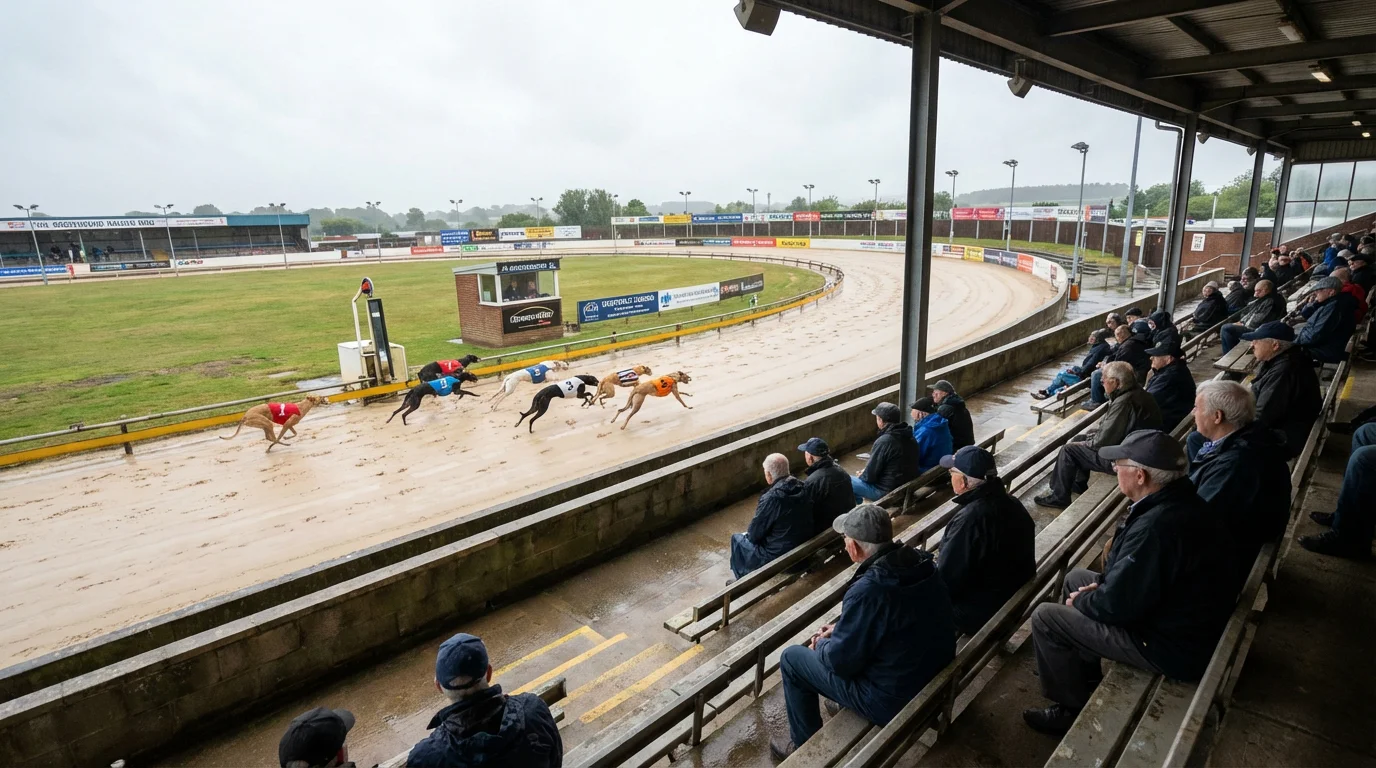
The Engine Behind Midweek Greyhound Betting
If you’ve ever placed a greyhound bet on a Tuesday afternoon, you’ve bet on BAGS. Most punters don’t think about it in those terms — they see a racecard, pick a dog, and move on. But the infrastructure behind that midweek afternoon meeting is worth understanding, because it affects everything from field quality to odds volatility to the kind of value you can realistically expect.
BAGS racing is the backbone of daily greyhound betting in the UK. It fills the gap between the higher-profile evening and weekend meetings by delivering a constant stream of races to betting shops and online platforms throughout the day. Without it, the greyhound betting market would be a fraction of its current size. For bookmakers, it’s product. For punters, it’s opportunity — but only if you know what you’re actually betting on.
This isn’t a glamorous side of the sport. There are no trophy presentations or Sky Sports cameras at a midweek BAGS meeting in Sunderland. But there is racing, there are odds, and there is money to be made — or lost — depending on how well you understand the format. The first step is knowing what BAGS actually means and why it exists in the first place.
What BAGS Stands For and How It Works
Bookmakers’ Afternoon Greyhound Service is exactly what it sounds like. BAGS is a contractual arrangement between licensed greyhound tracks and the betting industry, designed to supply a steady flow of racing content during daytime hours. The concept dates back decades, originally created to give high street betting shops something to show on their screens between horse racing fixtures. Greyhound racing, with its short races and rapid turnaround between events, was the perfect fit.
The mechanics are straightforward. A selection of UK greyhound stadiums host BAGS meetings on a rotating schedule, typically running from late morning through to early or mid-afternoon. Each meeting comprises around 12 to 14 races, spaced roughly 15 minutes apart. The races are broadcast via satellite and streaming services directly into betting shops and onto bookmaker websites, where punters can watch and wager in real time.
Tracks that host BAGS meetings receive a fixture fee from the betting industry — a payment for staging the racing. In return, bookmakers get live content that generates turnover throughout the day. This is a commercial relationship at its core, and it shapes how BAGS meetings are constructed. Fields are designed to be competitive but not exceptional. The focus is on producing a consistent betting product rather than showcasing elite-level greyhounds.
On a typical weekday, you might see BAGS meetings at three or four different tracks running in sequence, ensuring there’s almost always a race about to go off somewhere. The Greyhound Board of Great Britain oversees the scheduling and regulation, making sure that welfare standards, grading rules, and anti-doping protocols are maintained regardless of whether a meeting is a BAGS fixture or a Premier event. The rules of racing don’t change. The context does.
One detail worth noting is the grading. BAGS meetings tend to feature dogs in the middle and lower grades — A3 through A9 at most tracks, with the occasional A2 appearance. The very best dogs, the ones competing in open races and Category One competitions, rarely appear at BAGS meetings. That doesn’t make the racing uncompetitive. Grade A5 at Romford can produce tight, unpredictable six-dog fields. But it does mean the overall standard is different from what you’d see on a Saturday night at Towcester.
BAGS vs Premier Racing: The Key Differences
BAGS and Premier serve different audiences — and different betting markets. Understanding the distinction is essential for anyone who wants to approach greyhound betting with any kind of structure.
Premier Greyhound Racing manages the higher-profile fixtures: the evening meetings, the Saturday afternoon cards, the big competitions. These are the events that attract trackside spectators, television coverage, and the strongest runners. Premier meetings feature better-graded dogs, higher prize money, and larger betting markets with more liquidity. When a race is shown on Sky Sports or covered by Racing Post columnists, it’s almost certainly a Premier fixture.
BAGS racing, by contrast, is built for volume. It exists primarily as a betting medium, not a spectator sport. The meetings are staged during hours when footfall at the track is minimal — often just trainers, kennel staff, and a handful of racing officials. The audience is almost entirely remote: people watching on screens in Ladbrokes, Coral, and Betfred shops, or streaming through their bookmaker apps at home.
This difference in audience creates a difference in market behaviour. BAGS markets tend to be thinner, meaning fewer large bets are placed, and odds can shift more sharply on relatively small amounts of money. A single significant bet on a BAGS race at a smaller track can move the price by several points. In Premier racing, the volume of bets tends to stabilise the market, making odds movements more gradual and easier to track.
Prize money reflects the hierarchy clearly. A Premier open race might carry a first prize of several thousand pounds. A BAGS graded race at the same track could offer a few hundred. That gap directly affects the quality of dog you’ll find in each field. Trainers naturally target their better dogs at the richer prizes, reserving BAGS meetings for dogs working their way up the grades, coming back from injury, or simply not quite good enough for the top level.
None of this makes BAGS racing less worth betting on. In some ways, the opposite is true. The lower profile means less attention from professional punters and form analysts, which can create pockets of value that wouldn’t survive in a Premier market. But it also means less publicly available information, fewer expert tips, and a greater reliance on your own form reading. If you’re lazy about your homework, BAGS meetings will punish you. If you’re diligent, they can reward you precisely because most people aren’t.
How to Bet on BAGS Meetings
BAGS races are available on every major bookmaker’s platform. Whether you bet through Bet365, William Hill, Paddy Power, Betfair, or any of the other licensed operators, you’ll find BAGS meetings listed alongside Premier fixtures in the greyhound racing section. The racecards are published in the same format, the bet types are identical, and the odds are displayed the same way. From a betting mechanics standpoint, there’s no difference at all.
What does change is the timing and the volume of available information. BAGS racecards are usually finalised and published by mid-morning for that day’s meetings. Odds appear shortly after, though they can shift quickly once the early-morning form students start placing their bets. If you’re looking for value, checking the prices as soon as they’re posted — and comparing across multiple bookmakers — is particularly important for BAGS races, where the opening prices can be less accurate than for higher-profile meetings.
Most bookmakers offer Best Odds Guaranteed on BAGS races, though the specifics vary by operator. BOG means that if you take an early price and the starting price ends up being higher, you’ll be paid at the better odds. It’s essentially free insurance against taking a price too early, and it’s worth confirming whether your bookmaker applies it to the BAGS fixture you’re betting on before placing your wager.
Live streaming is widely available for BAGS meetings. Bet365, for instance, streams virtually every UK greyhound fixture, including all BAGS meetings, provided you have a funded account or have placed a bet in the last 24 hours. Other bookmakers offer similar services. Watching the race live isn’t just entertainment — it’s a data-gathering exercise. You can observe how a dog breaks from the traps, how it handles the first bend, and whether it shows any signs of fatigue or discomfort that the form figures alone won’t tell you.
One practical tip: BAGS meetings often feature the same dogs running at the same track week after week. If you follow a particular track’s BAGS fixtures consistently, you’ll start to build a mental database of individual runners, their tendencies, and their likely performance in specific conditions. That kind of accumulated knowledge is harder to develop from Premier meetings, where fields change more frequently and competition entries draw dogs from across the country.
BAGS Racing and the Betting Shop Floor
BAGS exists because betting shops need content — and greyhounds deliver it faster than anything else. A horse race might take three or four minutes. A greyhound race is over in under 30 seconds. That pace, combined with the 15-minute intervals between races, creates a rhythm that keeps punters engaged and tills ringing throughout the quieter hours of the trading day.
Walk into any high street betting shop on a weekday afternoon and the screens will be showing BAGS racing. It’s so much a part of the furniture that most regulars don’t even think of it by name. It’s just “the dogs.” But behind those screens is a carefully managed commercial operation that keeps 20 stadiums active, employs thousands of people in the greyhound industry, and generates a significant share of the sport’s total revenue.
For the punter, the practical takeaway is simple. BAGS racing is neither better nor worse than Premier racing — it’s different. The fields are slightly weaker, the markets are thinner, and the public scrutiny is lower. All of those things are neutral facts that can work for you or against you depending on how you use them. If you treat BAGS as background noise and bet casually, the margins will eat you alive. If you treat it as a structured betting opportunity with its own logic and its own form patterns, it becomes exactly what the bookmakers always intended: a product. The difference is that you’re not just consuming it. You’re analysing it.
