

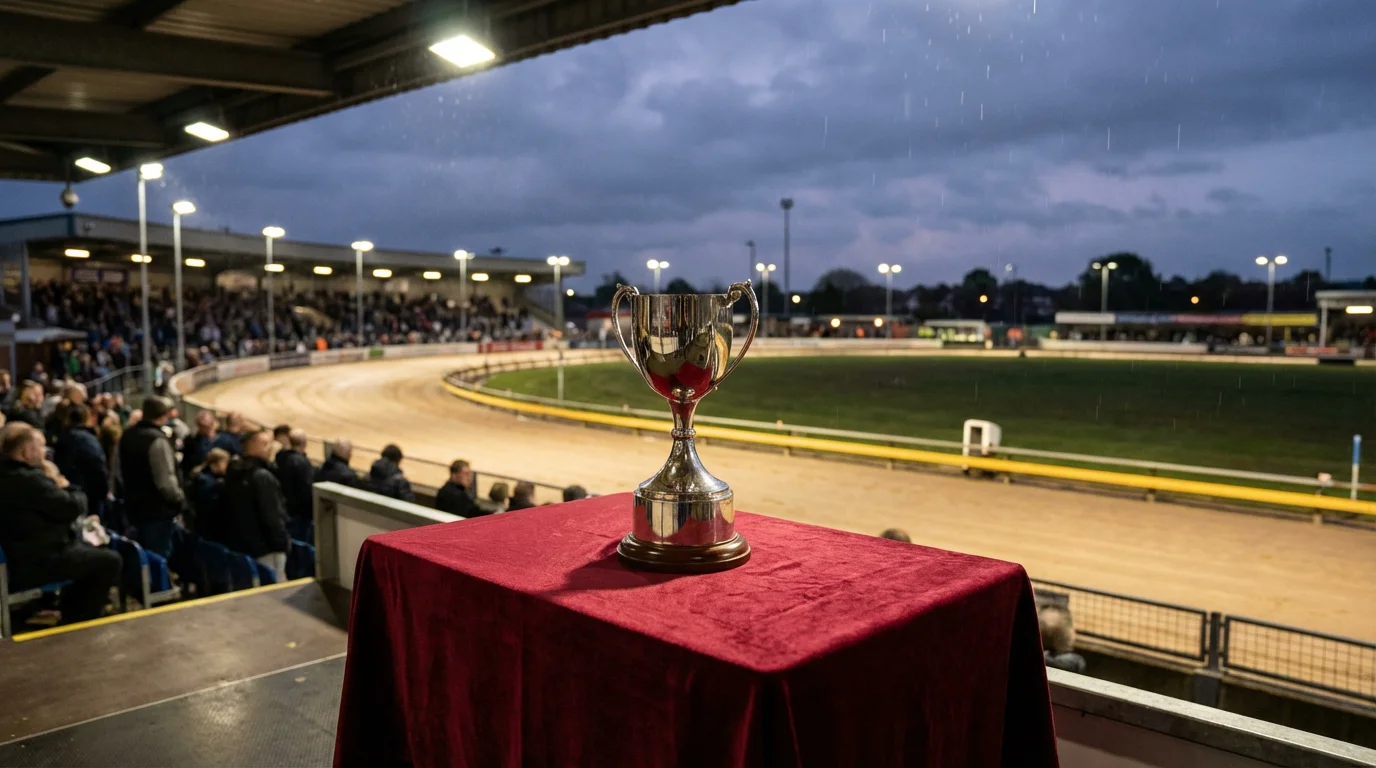
Where the Sport’s Best Dogs Race
Greyhound racing’s competition calendar stretches across the entire year, from winter opens through the summer Derby season and into the autumn classics. These events sit above the regular graded programme as the sport’s showcase fixtures — the races that determine the best dogs of their generation, carry the largest prize money, and attract the deepest betting markets. For the punter, competitions offer a different kind of opportunity from standard racing: higher-quality fields, more analytical depth, and markets that reward genuine knowledge of the sport’s upper tier.
The competitions are categorised by importance, with Category One events at the top and regional opens further down the hierarchy. Understanding the structure helps you know where to focus your attention and your bankroll.
Category One Competitions
Category One is the highest classification in UK greyhound racing, reserved for the sport’s most prestigious events. These competitions attract entries from across the UK and Ireland, carry the richest prize money, and produce the most liquid betting markets in the sport (GBGB — Open Race Calendar).
The English Greyhound Derby is the undisputed flagship. Run over the standard distance at Towcester, the Derby draws the best sprinter-milers in training and follows a multi-round format of heats, quarter-finals (in some years), semi-finals, and a six-dog final. The final, typically held on a Saturday evening in late June, is the single most-watched and most-bet-on greyhound race of the year.
The Greyhound St Leger is the premier staying competition, contested over a longer distance than the Derby. The St Leger tests different attributes — stamina and racing rhythm rather than pure speed — and attracts a different set of contenders. Dogs that feature in the Derby often don’t enter the St Leger, and vice versa, because the distance requirements are distinct. The St Leger typically runs in the autumn, providing a counterweight to the Derby’s summer dominance of the calendar.
The ARC Grand Prix at Sunderland is another Category One event, usually staged in the spring. Run over 640 metres — longer than the standard sprint distance — the Grand Prix provides a high-quality early-season test that often serves as a form guide for the Derby (Sunderland Greyhound Stadium — Fixture List). Dogs that perform well in the Grand Prix frequently reappear in the Derby entries, making the Grand Prix a valuable preview for ante post punters.
Other Category One events include the Greyhound Oaks, historically run for bitches only, and the Select Stakes, an invitation event that gathers a hand-picked field of top-class runners. The exact calendar of Category One events can shift between years as tracks and organisers adjust their programmes, but the core events — Derby, St Leger, Grand Prix — are the fixed pillars.
From a betting perspective, Category One competitions are the most analytically rewarding. The dogs are known quantities with extensive form records, the market is deep enough to absorb meaningful bets, and the multi-round formats produce information at every stage that refines your assessment of the remaining contenders. If you’re going to invest serious time in studying any greyhound events, these are the ones that justify the effort.
Category Two and Regional Competitions
Below Category One, a layer of Category Two and regional competitions provides high-quality racing throughout the year at tracks across the country. These events don’t carry the same national prestige as the Derby or St Leger, but they attract strong fields, offer meaningful prize money, and generate betting markets worth engaging with.
Regional derbies are among the most prominent Category Two events. The Scottish Greyhound Derby was historically held at Shawfield in Glasgow until the stadium’s closure in 2020. The East Anglian Derby at Yarmouth and the Midland Derby attract entries from their respective regions and occasionally from further afield. These events follow similar multi-round formats to the Category One competitions — heats through to a final — but the entry pool is more localised. For punters with strong knowledge of a particular region’s racing, regional derbies offer excellent opportunities because the dogs are familiar and the form data is directly relevant.
Track-specific competitions add another layer. Events like the Golden Jacket (historically held at Crayford before the stadium’s closure in January 2025), the Grand National (a prestigious hurdles event also most recently at Crayford), and various sprint and staying championships at individual tracks provide focused competition over specific distances and conditions. These events are less well known nationally but are closely followed by local punters and often produce competitive betting markets with opportunities for value.
Invitation events and champion stakes round out the Category Two calendar. These are typically short-format competitions — sometimes a single race rather than a multi-round tournament — featuring selected dogs based on recent form or trainer nomination. The fields are small and the quality is high, which produces tight betting markets where favourites tend to oblige more often than in open heats with larger fields.
The combined effect of Category Two and regional competitions is a near-continuous stream of quality racing throughout the year. Between the Category One headline events, these competitions ensure there’s always something worth watching and betting on at the upper tier of the sport.
Competition Formats: Heats, Semis, Finals
Most greyhound competitions follow a knockout format that progressively reduces the field to the six dogs that contest the final. The standard structure runs through first-round heats, second-round heats (or quarter-finals), semi-finals, and the final itself.
First-round heats divide the total entry into groups of six. The typical qualifying criteria is “first two home” — the top two finishers in each heat advance to the next round, while the remaining four are eliminated. Some competitions use “first three home” or include a fastest-loser mechanism that gives eliminated dogs a second chance based on their time. These variations affect the strategy: in a “first two” heat, a dog only needs to finish in the top two, which means a conservative race from a good draw can be more effective than an all-out effort to win.
The draw for each round is conducted separately. A dog drawn in trap one for its first-round heat might draw trap six for the second round. This randomness means that trap draw luck plays a larger role in competitions than in standard graded racing, where dogs typically race at their home track from familiar positions. A genuine Derby contender drawn in trap six twice in a row faces a structural disadvantage that has nothing to do with ability.
Semi-finals are where the competition tightens dramatically. By this stage, every remaining dog is high quality, and the margins between qualifying and elimination are razor-thin. Semi-final nights are among the best betting opportunities in the greyhound calendar because the form data is extensive — you’ve watched these dogs through one or two rounds already — and the competitive pressure reveals which dogs handle big-race situations and which fold under pressure.
The final is a single race, winner takes all. Six dogs, one chance. The finality of it concentrates the betting interest and produces the most analysed single race on the calendar. Final trap draws are crucial and can reshape the ante post market overnight.
Betting on Greyhound Competitions
Competition betting offers opportunities at every stage of the tournament. Ante post markets open before the first heat and provide the longest odds and the highest risk. Heat-by-heat betting offers standard race-day opportunities with the added context of competition pressure and progression stakes. Outright markets run alongside the heats and semi-finals, updating after each round as the field narrows.
The most informed approach is to watch every round and adjust your outright position as new information emerges. A dog that wins its first-round heat impressively from a bad draw is showing more than a dog that scrapes through from a favourable position. The outright odds may not fully distinguish between these two scenarios, which creates value for the observant punter.
Heat betting itself requires a slight adjustment from standard race analysis. In a competition heat, dogs don’t need to win — they need to qualify. A dog whose running style is to settle behind the pace and finish strongly might be a poor win bet but an excellent place bet, because it only needs to finish in the top two. Conversely, a front-runner drawn inside might be an excellent win bet but a risky outright selection if the later rounds produce less favourable draws.
One practical tip: track the qualifying times across all heats within a round. If the fastest heat produces a time two lengths quicker than the slowest, the dogs from the fast heat are likely facing stiffer competition in the next round. The dogs from the slow heat may be progressing against weaker opposition, only to be exposed when they meet the fast-heat qualifiers in the semi-final. These inter-heat comparisons are simple to make and highly informative for next-round betting.
