

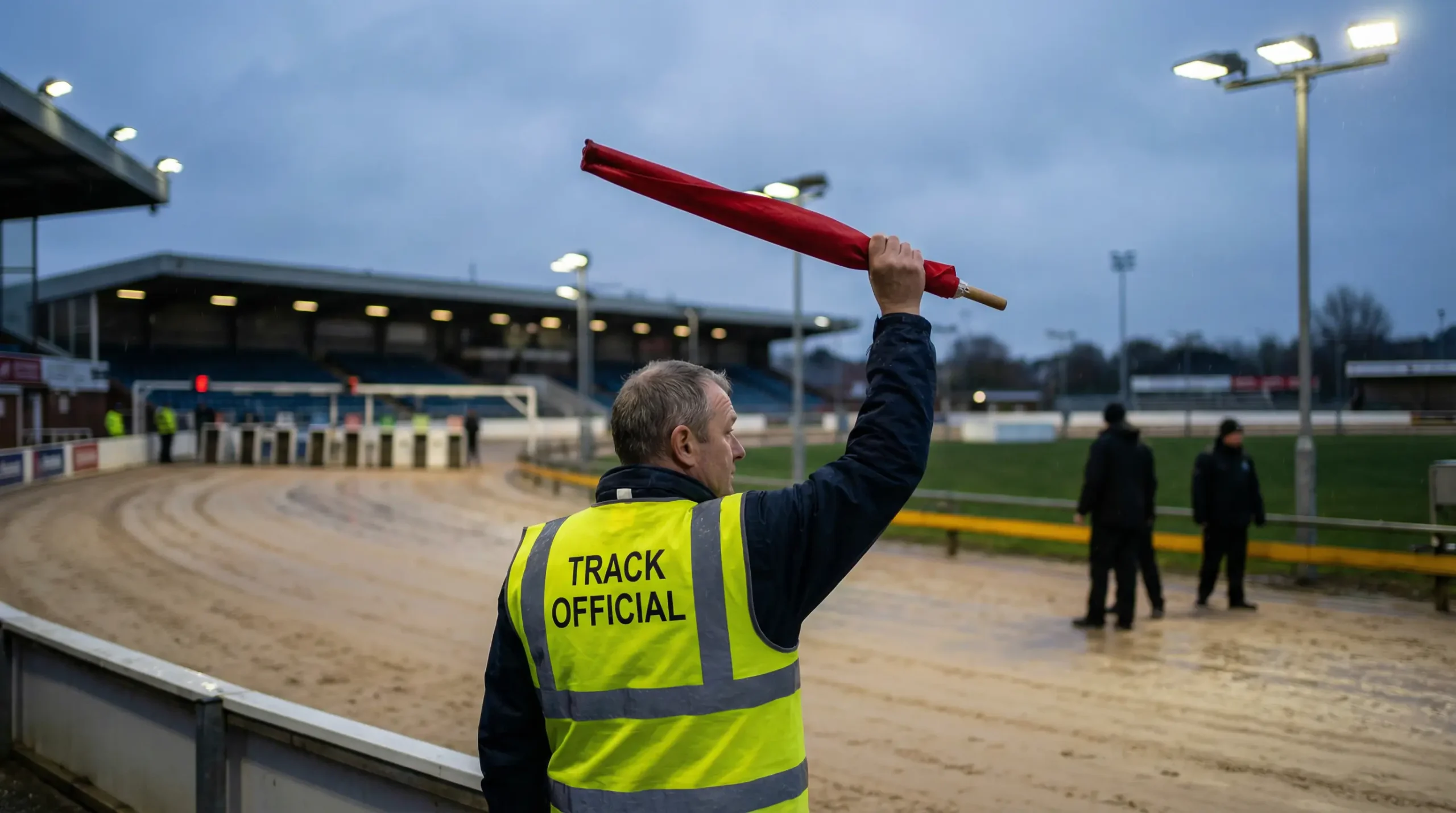
When the Result Doesn’t Count
A greyhound race runs, dogs cross the line, a finishing order is established — and then the result is voided. It happens more often than casual punters expect, and when it does, the consequences for your bet depend on a set of rules that most people encounter for the first time when their winning ticket suddenly becomes worthless. Void races and re-runs are an unglamorous but necessary part of greyhound racing, and understanding the rules saves confusion and, occasionally, money.
The reasons a race gets voided range from the mechanical to the bizarre. What they have in common is that something occurred during the race that, in the stewards’ judgement, compromised the integrity of the result badly enough that it cannot stand. The race is declared void, bets are settled according to specific rules, and in many cases the race is re-run later on the same card.
What Triggers a Void Race?
The most common cause is a hare malfunction. Greyhounds chase an artificial hare — a motorised lure that runs on a rail around the inside of the track. If the hare stops, slows dramatically, or moves erratically during the race, the dogs’ running is disrupted and the result is compromised. A hare that stops mid-race causes dogs to decelerate, collide, or lose interest. The result under those conditions doesn’t reflect the dogs’ racing ability, so the stewards void the race.
Trap malfunctions are another trigger. If one or more traps fail to open at the start, the affected dog or dogs are denied a fair start, and the race is voided. A trap that opens late gives the trapped dog no chance, while the other runners are already at full speed. Less commonly, a trap might open prematurely — before the hare has reached the correct position — which gives that dog an unfair advantage.
Interference beyond normal racing — such as a foreign object on the track, a loose dog entering the racing surface, or a safety barrier failing — can also trigger a void. These incidents are rare but do occur, particularly at tracks where the public areas are close to the running surface.
Lighting failures at evening meetings have caused void races when the floodlights fail mid-race, leaving the track in darkness. Power cuts, while uncommon, are taken seriously because dogs running at 40 miles per hour on a track they can’t see is a significant safety hazard. Any race run in compromised lighting conditions is voided immediately.
Stewards also have the discretion to void a race if they determine that the running was so badly affected by a specific incident — a dog falling in front of the field, for instance, causing a pile-up — that no meaningful result can be extracted. This is a judgement call rather than a mechanical trigger, and it’s used sparingly. Most incidents of interference during racing are managed through the form comments and don’t result in a void. The threshold for voiding is that the interference must have affected the overall integrity of the race, not just the chances of one or two runners.
Re-Run Rules and Procedures
When a race is voided, the standard procedure is to schedule a re-run later on the same card. The re-run typically takes the place of a scheduled race slot — either an existing gap in the programme or an extra race added to the end of the meeting. The same six dogs contest the re-run, drawn from the same traps, under the same race conditions.
If a dog is injured or distressed as a result of the incident that caused the void — a fall, a collision, or a hare-related injury — it may be withdrawn from the re-run on veterinary advice. In that case, the race is re-run with five dogs, or a reserve may be called in depending on the track’s policy and the availability of a suitable replacement.
Re-runs create an unusual situation for bettors. You’ve already seen the dogs run — or at least attempt to run — in the voided race. If the void was caused by a hare malfunction that occurred late in the race, you may have seen enough of the racing to form a view about each dog’s condition and readiness. A dog that was leading comfortably when the hare stopped might be your pick for the re-run. A dog that fell during the void might be physically or psychologically affected, even if the vet clears it to run again.
The market for re-runs often reflects the voided race’s running. Bookmakers adjust their prices based on what was observed before the void, and punters who watched the incident will have opinions that weren’t available when the original prices were set. Re-run markets can move sharply and quickly, making them both an opportunity and a trap depending on how well you read the situation.
How Void Races Affect Your Bets
If you placed a bet on a race that’s subsequently voided, the bet is voided too. Your stake is returned in full, and the bet is treated as if it never existed. This applies to all bet types — singles, forecasts, tricasts, each-way — regardless of what position your dog was in when the race was voided. Even if your dog was 10 lengths clear and the hare stopped 20 metres from the line, the result doesn’t count and your bet is cancelled.
The refund is typically processed automatically. Online bookmakers will return the stake to your account balance, usually within minutes of the void being declared. On-course bets settled through the Tote or with bookmakers are refunded at the point of sale. There’s no ambiguity here: a void race means a void bet means a full refund.
For the re-run, you need to place a new bet. The voided bet does not automatically carry over to the re-run. This is an important distinction that catches some punters out — they assume their original bet still stands because the same dogs are running from the same traps. It doesn’t. You must actively place a new bet on the re-run if you want to have money on the race.
The re-run is treated as a completely new race for betting purposes. New prices are set, new bets are placed, and the result of the re-run is the official result. If you had placed a forecast on the original race and it was voided, you can place a new forecast on the re-run — or you can decide, based on what you observed in the voided race, that a different bet is more appropriate.
Void Races and Accumulator Stakes
Void races interact with accumulators in a specific way that’s worth understanding because it can significantly affect your expected return. If one leg of an accumulator is voided, that leg is removed from the bet and the accumulator continues with the remaining legs. A four-fold with one void leg becomes a treble. A treble with one void leg becomes a double.
This reduction in legs reduces the potential payout because there’s one fewer multiplier in the chain. A four-fold at average odds of 3/1 per leg returns around 255/1. Remove one leg and the treble returns around 63/1. That’s a significant reduction, and it happens through no fault of your own — just bad luck that one race on your coupon was voided.
The upside is that the voided leg doesn’t count as a loss. If the void had instead been a losing result, your entire accumulator would have been dead. The void effectively gives you a second chance — a shorter acca with reduced returns, but a live bet rather than a dead one. Whether this feels like good or bad fortune depends on how the rest of your legs perform.
Some punters find it useful to re-bet the voided leg as a single alongside the surviving accumulator. If the re-run produces a winner, you capture some of the value that the void took away — not at the full accumulator odds, but as a standalone profit that partially compensates. This is an optional extra, not a requirement, but it’s a rational response to an unusual situation.
The main practical advice for accumulators and voids is awareness. Check your open bets if you know a race has been voided at one of the meetings on your coupon. Confirm that your bookmaker has correctly adjusted the accumulator from a four-fold to a treble (or whatever the revised structure should be). Errors are rare but not impossible, and catching them before the bet settles is easier than disputing the payout afterwards.
