

The Numbers Behind the Numbers
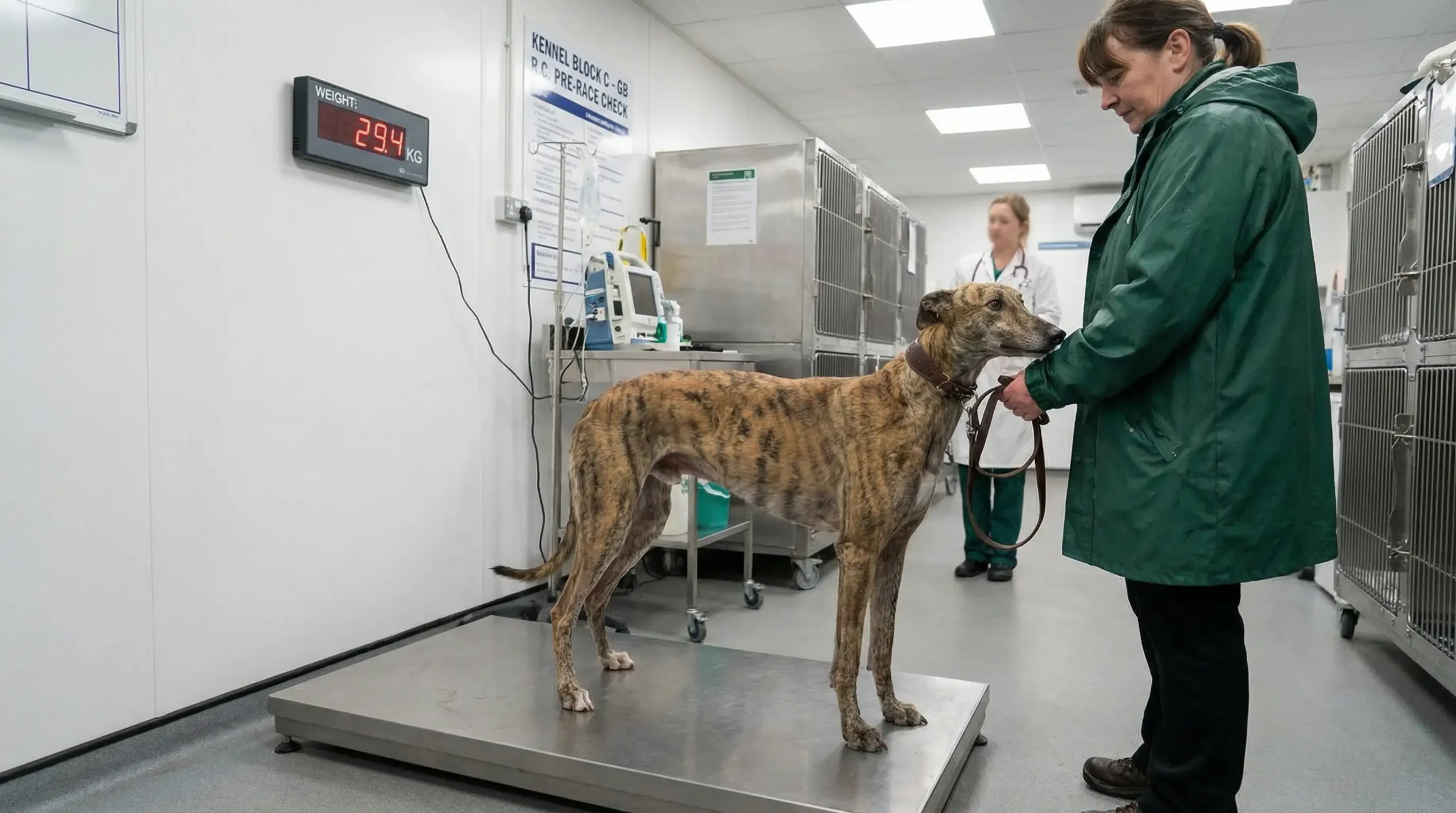
Every greyhound is weighed before every race, and that weight is published on the racecard for anyone to see. Every greyhound’s age is listed too — usually expressed as years and months, derived from its date of birth. These are two of the most visible data points on the card, and two of the most routinely ignored. Most punters skim straight past the weight and age columns, heading for the form figures, the trap draw, and the odds. That’s a missed opportunity, because both variables carry information about a dog’s current physical condition that the form figures alone can’t provide.
Weight and age don’t win or lose races by themselves. But they add context that makes the rest of your analysis sharper. A dog whose form has dipped while its weight has increased by a kilogram might be carrying condition rather than losing ability. A dog approaching its fourth birthday with declining times might be ageing out of its peak. These are signals — not certainties — and they’re free.
Peak Age for Racing Greyhounds
Greyhounds typically begin racing at around 18 months to two years of age. The peak performance window for most dogs falls between two and three and a half years. Within that window, dogs reach physical maturity, develop their racing intelligence, and produce their fastest times. After three and a half, performance tends to plateau or decline, though individual dogs vary considerably — some maintain competitive form past four years, while others fade before three.
The early stages of a greyhound’s career are characterised by rapid improvement. A dog’s first five or six races often show a steep learning curve — times dropping, finishing positions improving, and running style becoming more established with each outing. This improvement phase is valuable for bettors because the market often undervalues young dogs whose recent form looks modest but whose trajectory is clearly upward. A dog that finished fourth on debut and third in its second race might be available at generous odds for its third run, even though the trend suggests it’s about to be competitive.
At the other end of the spectrum, veteran dogs — those aged four and above — present a different challenge. Their form lines are long and their capabilities are well known to the market, which means there’s less hidden value. But veterans can still offer betting opportunities when they drop in grade, move to a new track, or encounter conditions that suit their experience. An older dog with proven form on slow going might be undervalued on a wet night when younger, faster rivals are expected to struggle with the heavier surface.
The transition from peak to decline is rarely sudden. More often, it appears as a gradual slowing — times creeping up by a few hundredths per run over several months, finishing positions drifting from first and second to third and fourth. Spotting this pattern early allows you to adjust your expectations before the market catches on. A dog that was a reliable A3 runner six months ago but is now struggling to place in A4 may still be priced as if its best form is current, because the headline form figures don’t yet look disastrous.
How Weight Fluctuations Affect Speed
Greyhound weight is measured in kilograms and published to one decimal place on the racecard. The average racing greyhound weighs between 26 and 36 kilograms, with dogs varying by breed line, sex, and individual build. Male dogs are typically heavier than females, and dogs bred for staying races tend to be larger than sprint specialists.
What matters for betting isn’t the absolute weight — it’s the change. A dog that races consistently at 31.2 kg and turns up at 32.4 kg has gained over a kilogram since its last run. That gain needs an explanation. It might be positive: the dog has been resting, eating well, and building muscle. Or it might be neutral to negative: the dog has been inactive and carrying excess condition that will slow it down.
Weight loss carries a similar dual interpretation. A dog shedding half a kilogram between runs might be fitter and sharper — leaned out through training and ready to perform. Or it might be unwell, stressed by travel, or not eating properly. The weight trend across multiple races is more informative than any single reading. A dog that has gradually lost weight over three consecutive runs while its finishing positions have improved is getting fitter. A dog that has lost weight while its form has declined may have an underlying issue.
The general rule of thumb among experienced greyhound punters: weight changes of half a kilogram or less between runs are typically insignificant. Changes of one kilogram or more are worth investigating. Changes of 1.5 kilograms or more are red flags that something meaningful has changed in the dog’s condition, positively or negatively.
One specific pattern to watch: weight gain after a break. A dog that hasn’t raced for three or four weeks often comes back heavier. If the weight increase is modest — around 0.5 kg — and the dog ran a satisfactory trial, the weight is unlikely to be a problem. If the increase is larger, the dog may need a race to shed the excess condition before returning to form. Backing dogs at full odds on their first race back after a break with a significant weight increase is risky. Waiting for the second race — by which point the dog has typically trimmed back down — is often the smarter move.
Reading Weight Trends on the Card
Most racecard services display the weight for each of a dog’s recent runs alongside the form figures. This creates a visible trend that takes seconds to scan. Look for consistency first: a dog that weighs between 30.8 and 31.2 across its last six runs is physically stable and well managed. The trainer is maintaining consistent condition, which is a positive sign for reliable performance.
Next, look for deviations. If the latest weight is noticeably different from the dog’s recent range, flag it. Cross-reference the weight change with the time since the last race. A weight increase after a two-week gap is normal. A weight increase after racing four days ago is less expected and might indicate an issue — or simply a heavier feeding before the race.
Weight data is most useful in combination with other indicators. A dog showing declining form, increasing weight, and lengthening times across its last three runs is presenting a consistent picture of a runner past its peak or out of condition. Each signal individually might be noise. Together, they’re a pattern. Conversely, a dog showing improved form, stable weight, and faster times is in an upward cycle that the racecard is confirming from multiple angles.
Trainers are aware that punters examine weight data, and some manage their dogs’ pre-race feeding to maintain consistent weigh-in figures. This is entirely legal and simply reflects professional preparation. It does mean that weight data is slightly less raw than it might appear — the number on the card is managed rather than purely natural. But the management itself is informative: a trainer who keeps their dogs at consistent racing weight is doing their job well, and that consistency is a positive indicator in its own right.
Age and Weight as Betting Angles
Neither age nor weight is a standalone betting system. You won’t find a profitable strategy that bets on every two-year-old or against every dog that’s gained a kilogram. But both variables function as filters that sharpen the selections you’ve already identified through form analysis.
The most productive use of age data is identifying dogs in the improvement phase (under 30 months) that the market is undervaluing because their form line is short and doesn’t yet show wins at the current grade. These dogs are getting better fast, and their next run may be significantly better than their last. Backing improvers at each-way odds, where a place return covers you while the dog finds its level, is a disciplined approach that age data supports.
The most productive use of weight data is identifying dogs whose physical condition has changed meaningfully since their last competitive form. If a dog’s best form came at 29.8 kg and it’s now racing at 31.2 kg, the form line may not be a reliable guide to today’s performance. Similarly, a dog that’s trimmed from 33.0 to 31.5 over three runs while improving from sixth to second is showing a clear fitness trajectory that the market may not have fully priced.
Combined, age and weight create a physical profile that sits beneath the performance data. A young dog at a consistent racing weight with improving form is the ideal profile — everything points upward. An older dog with increasing weight and declining form is the inverse — everything points down. Most dogs fall somewhere between these extremes, but knowing where each runner sits on the spectrum adds a dimension of understanding that most casual punters never access.
