

Before You Go: Setting Expectations
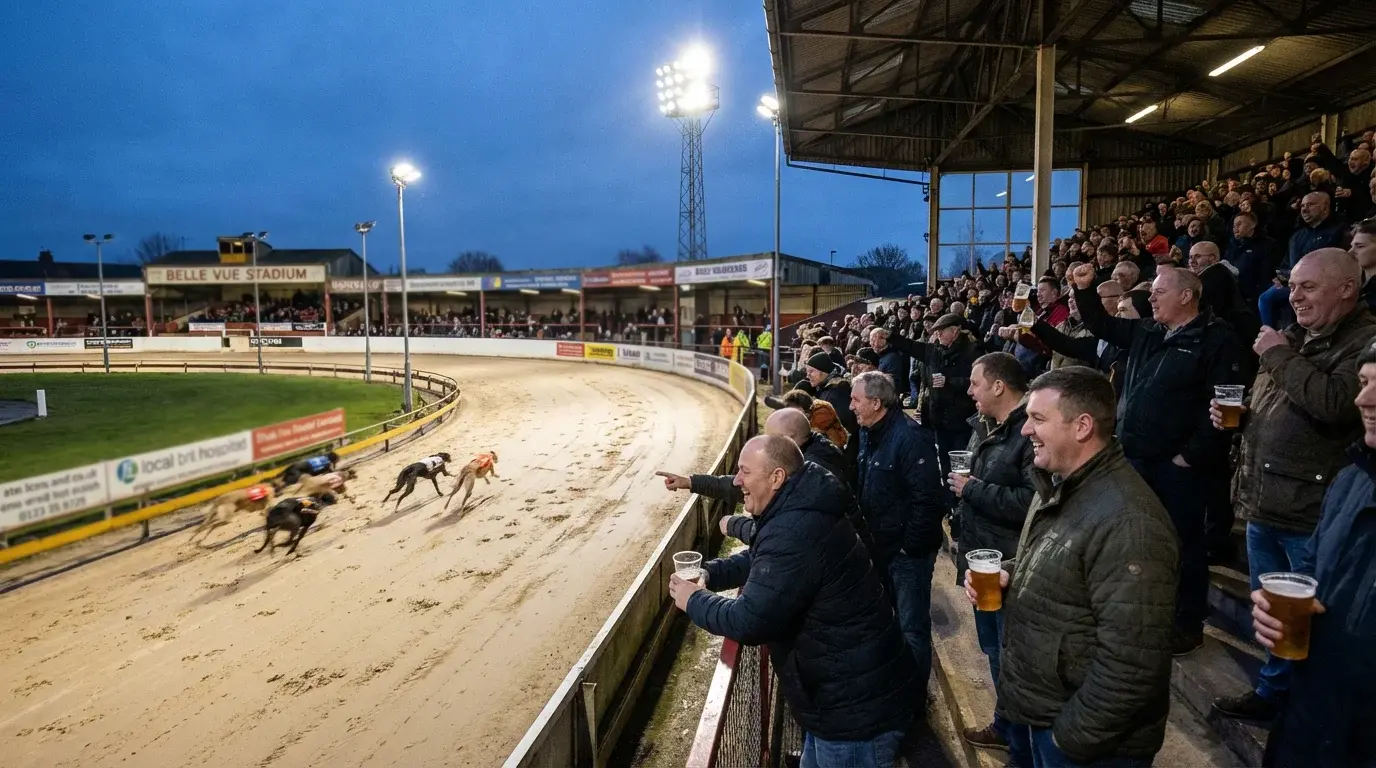
A night at the dogs is one of British sport’s most accessible live experiences. You don’t need to know anything about greyhound racing to enjoy it, you don’t need to dress up, and you don’t need to spend a fortune. The dogs run, the crowd reacts, food and drink flow, and the whole thing moves at a pace that horse racing and football can’t match — a new race every 15 minutes, with no lengthy intervals and no dead time.
But if you’re going for the first time, it helps to know the basics. Track layouts, betting options, dining arrangements, and the general rhythm of an evening meeting all benefit from a bit of advance knowledge. The difference between a good night at the dogs and a slightly confused one usually comes down to arriving with the right expectations.
This isn’t a guide to betting strategy at the track — that’s covered elsewhere. This is about the experience itself: what you’ll find when you walk through the turnstile, how to navigate the facilities, and how to get the most out of the evening whether you’re a seasoned punter or someone who’s never seen a greyhound race in their life.
Admission, Prices, and Dress Code
Admission prices at UK greyhound tracks are modest. Most stadiums charge between five and ten pounds for general admission to a standard evening meeting, with concessions for groups, advance bookings, and midweek fixtures. Some tracks offer free admission for BAGS meetings, though these daytime fixtures are typically sparsely attended and lack the atmosphere of an evening card.
Higher-profile meetings — Derby nights, competition finals, bank holiday fixtures — may charge slightly more, but even the premium events rarely exceed twenty pounds for standard entry. Compared to a Premier League football match or a day at the horse racing, greyhound racing is among the cheapest live sports experiences available.
Dress code is relaxed at virtually every UK track. Jeans, trainers, and casual wear are the norm for general admission. There’s no paddock equivalent that requires smart dress, and nobody will turn you away for wearing a hoodie. The exception is if you’ve booked a restaurant table or hospitality package, where some tracks request smart casual attire — but even this is applied loosely. The crowd at a greyhound meeting is mixed: families, couples, groups of friends, solo regulars, and office outings all share the same space without pretension.
Children are admitted to most tracks, though age restrictions apply for certain areas — particularly the bars and betting areas. Some stadiums actively market family evenings with reduced admission for under-16s and entertainment beyond the racing. If you’re planning a family visit, check the track’s website in advance for any specific policies or events tailored to younger visitors.
Betting on Track: Tote and Bookmakers
Betting at the track operates through two channels: the Tote (pool betting) and on-course bookmakers (fixed-odds betting). Both are available at every licensed stadium, and understanding the difference helps you choose the right option for each race.
The Tote is a pool betting system. Your stake goes into a communal pool with all other bets on the same market. After the race, the pool is divided among the winning bets, minus a deduction for the operator’s commission. The Tote offers win, place, forecast, and tricast pools. The dividends aren’t known until after the race — they depend on how much money was bet and how it was distributed across the runners. Tote dividends can be generous when an unexpected result sends money to a lightly backed combination, particularly in forecast and tricast pools.
On-course bookmakers operate in the traditional way — they display prices on their boards, and you bet at the price offered. The odds are fixed at the moment you place your bet, so you know your potential return before the race starts. On-course bookmakers at greyhound tracks typically offer win and each-way markets, with some also providing forecast and tricast odds.
The practical difference is in transparency and timing. With a bookmaker, you see the price and decide whether to take it. With the Tote, you commit your money without knowing the exact return. For straightforward win bets, bookmakers give you more control. For forecasts and tricasts, the Tote pool can offer better value because the dividends reflect the actual distribution of bets rather than a bookmaker’s margin.
Cash is still the primary medium at on-course bookmakers, though contactless and card payments are increasingly accepted at Tote windows. If you prefer to use your phone, most tracks have Wi-Fi or sufficient mobile coverage to allow you to bet through your regular online bookmaker while watching the racing live. Many punters use a hybrid approach: betting online for their main selections (to access BOG and competitive odds) while using the Tote on-course for the occasional forecast or tricast on races they fancy.
Dining and Hospitality Options
Most UK greyhound stadiums offer restaurant and hospitality packages alongside general admission. The typical format is a trackside restaurant with tables overlooking the finish line, where you can eat a meal while watching the racing. Packages usually include admission, a printed racecard, a meal (often a two or three-course set menu), and sometimes a complimentary drink or betting voucher.
Restaurant packages vary in price from around twenty to fifty pounds per person, depending on the track and the level of service. The food is generally competent — not destination dining, but a solid meal that’s considerably better than what you’d get at a football ground. Popular tracks like Romford, Towcester, and Sunderland have invested in their hospitality facilities and offer a genuinely pleasant dining experience alongside the racing.
For groups and corporate events, private boxes and hospitality suites are available at larger tracks. These cater to office outings, birthday celebrations, and stag or hen parties — all of which are common at greyhound stadiums. Group bookings often include extras like a tote betting tutorial for beginners, dedicated screens showing the racing, and a host who explains the racecard and helps guests place their first bets.
Outside the restaurant, general admission areas offer the usual assortment of fast food, bars, and snack outlets. Burgers, chips, pies, and hot dogs are standard fare. Drinks are sold at track bars with prices comparable to pub prices — cheaper than a football stadium, more expensive than your local. The atmosphere in the general areas is informal and social, with most people standing near the track rail for the races and retreating to the bars or food stalls between events.
Making the Most of Your Night at the Dogs
The rhythm of a greyhound evening works in your favour. With races every 15 minutes and a typical meeting running 12 to 14 races, there’s a natural cycle of studying the card, placing bets, watching the race, and resetting for the next one. You don’t need to bet on every race — in fact, you’ll enjoy the evening more if you pick your spots and sit some races out. The interval between races is enough time to grab a drink, discuss the last result, and look at the next card without feeling rushed.
Arrive early enough to see the first race. The first race at an evening meeting is often a lower-grade event that the more casual attendees skip, but watching it gives you a feel for the track conditions and the speed of the surface. If the sand is running slow — after rain, for instance — you’ll want to know that before placing heavier bets on later races.
Bring a racecard or use the digital version available through the track’s website or app. The printed racecard is sold at the entrance for a nominal fee and contains the full form for every runner in every race. Even if you normally use your phone for form, having the physical card is convenient at the track — it gives you something to scribble notes on and doesn’t drain your battery.
Set a betting budget before you arrive and stick to it. The pace of greyhound racing — a new opportunity every 15 minutes — makes it easy to chase losses or increase stakes as the evening progresses. A fixed budget removes that temptation. Treat the evening as entertainment with a defined cost, and any winnings are a bonus. That mindset keeps the night enjoyable regardless of whether the dogs cooperate.
Finally, watch the dogs in the parade ring before each race. At most tracks, the greyhounds are paraded past the stands before being loaded into the traps. The parade gives you a chance to assess each dog’s physical condition and temperament. A dog that looks relaxed and muscular is more likely to perform well than one that looks agitated or underweight. This isn’t scientific analysis — it’s a visual impression — but experienced punters regard the parade as one more piece of information to factor into their thinking. At the very least, it connects you to the animals behind the numbers, which is part of what makes live racing a fundamentally different experience from staring at a screen.
